Case study · Citizen participation · Missions Publiques
The app behind a European citizens’ panel, in 24 languages, built by a nontechnical team.
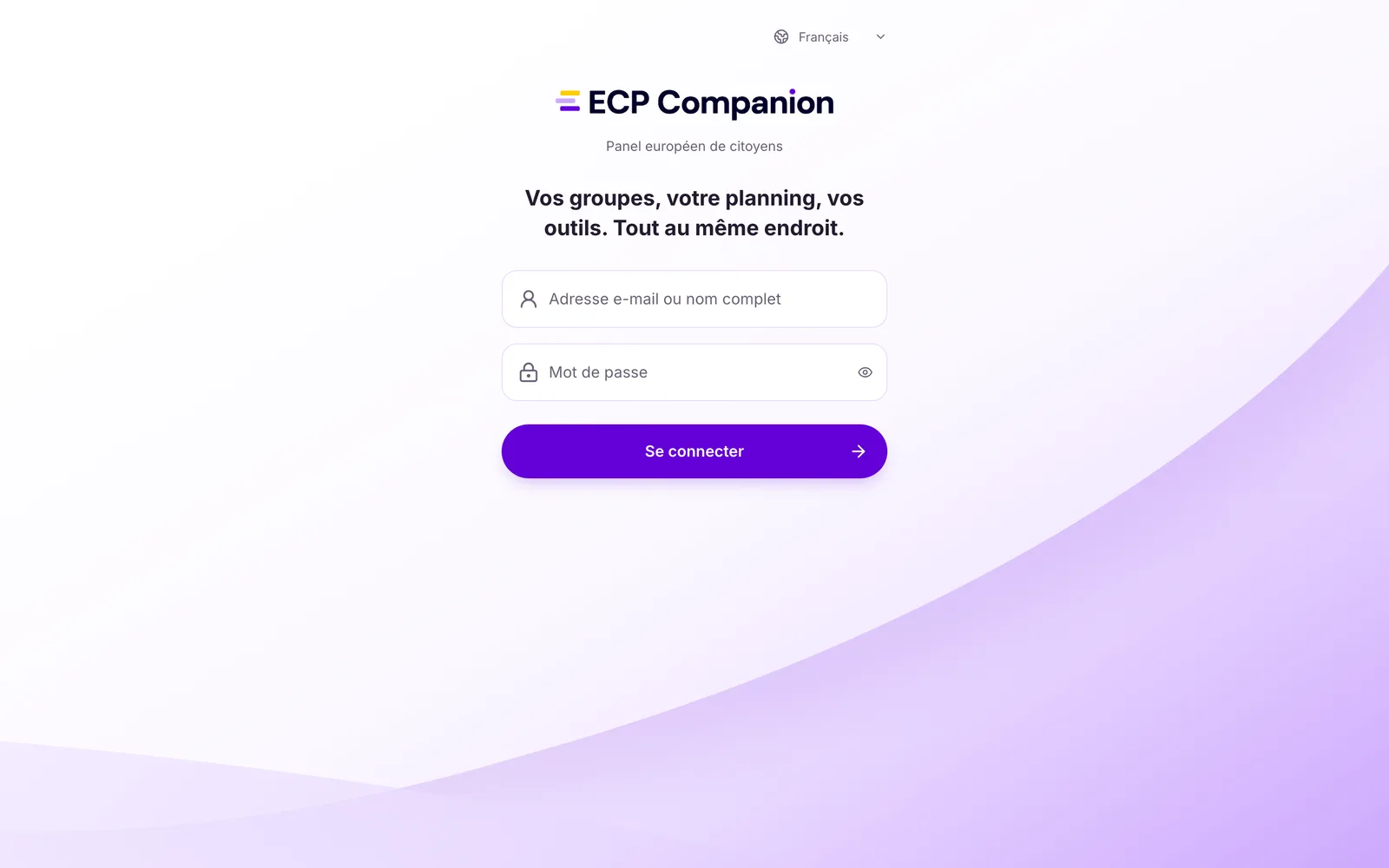
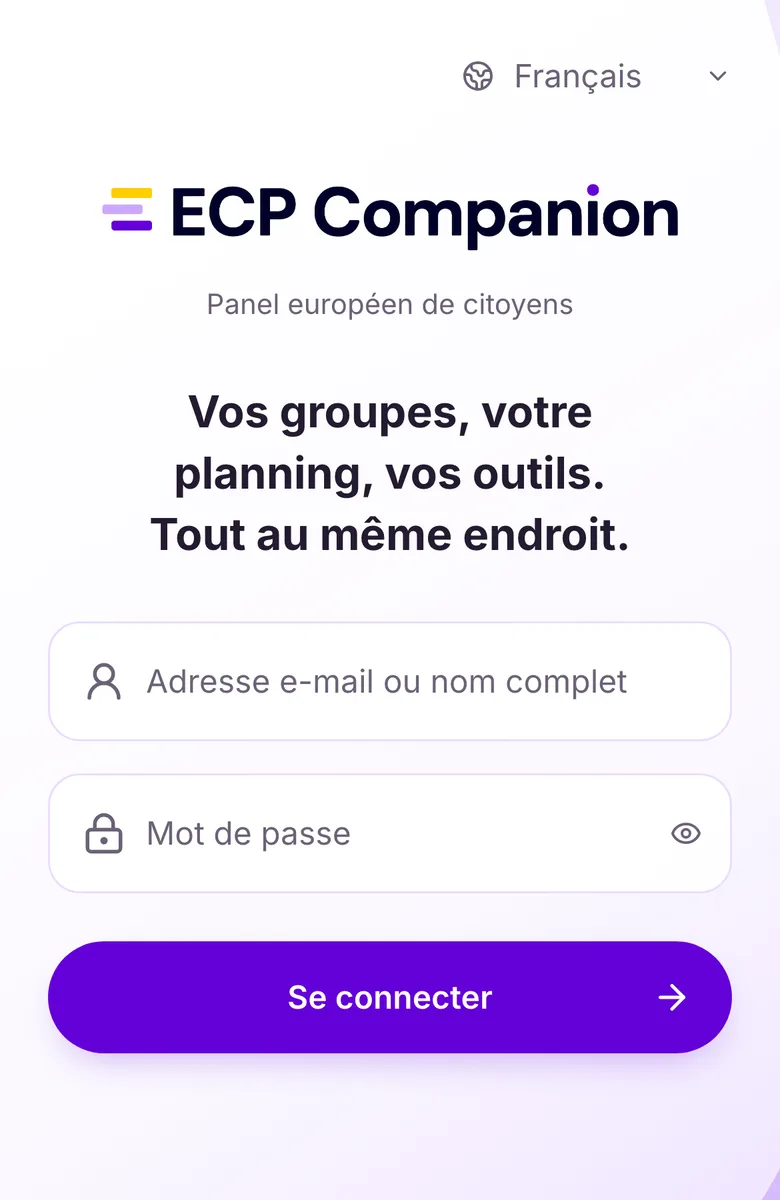
From 17 to 20 September 2026, 150 citizens from all 27 member states met for the first session of the European citizens’ panel run under contract with the European Commission. Each of them took part in their own language through ECP Companion, an app built by the Missions Publiques team, whose expertise is citizen participation, not software. Over the three months before, we worked with Jean Baudroux and Antoine Vergne to strengthen its foundations, add new features and pass on a software development method.
By Nicolas Mathieu, founder of ClairAI. Published on , updated on .
24 languagestranslated in real time for 150 citizens from the 27 member states
- 150European citizens supported by the app
- 176pull requests reviewed and merged
- 27 pointsraised by the full September audit, fixed one by one
- 3 monthsfrom July to the first session in September
The problem
For the European citizens’ panel, the team had quickly built an app with an AI-assisted development tool: many features, citizens from 27 countries, facilitators, Commission experts, and a first session whose date could not move.
The challenge was not adding screens. Votes had to be counted correctly, everyone had to see only what concerned them, translations had to keep up, and the app had to hold when everyone logged in at once. The team also needed to be able to carry on alone, with good habits.
ClairAI led the audit, the architecture and the code fixes, reviewed Jean’s work and set up the team’s way of working. Jean kept building the panel features in parallel.
What we built
First, strengthen the foundations
In July, a first audit and seventeen consolidation tickets: vote security, timeouts on external services, performance of the document assistant. The app goes live on ecpcompanion.eu.
Then, new features
Once the foundations were solid, new features were added without weakening what already worked: translated direct messaging between facilitators and participants, moderation, an admin console, notifications, then a full accessibility cycle, audited and fixed.
A method, and code review as training
One Linear ticket, one branch, one pull request, prioritised with the team around the next session. Every pull request from Jean is reviewed and each comment explained. Decisions, checks and the design system are documented in the repository.
Testing in real conditions
In early September, a full audit raised twenty-seven points, fixed in small pull requests. Continuous integration, error monitoring, regression tests. Before the session, every user profile was replayed with test accounts and simultaneous connections on chat, votes and translations.
The result
The panel’s first session took place from 17 to 20 September 2026 on a strengthened app: role-based access, reliable votes, translated messaging between facilitators and participants, audited and fixed accessibility, mobile use.
The Missions Publiques team keeps the method: tickets, reviewed pull requests, tests and checks after every release. It continues to develop the app itself.
Figures taken from the ECP Companion repository history, July to September 2026. The app is restricted to panel participants and staff.
« The panel’s first session went very well, and his support clearly contributed to that. We come out of it with a stronger app, better working methods and more confidence to keep developing it. »